


















 Back
Back


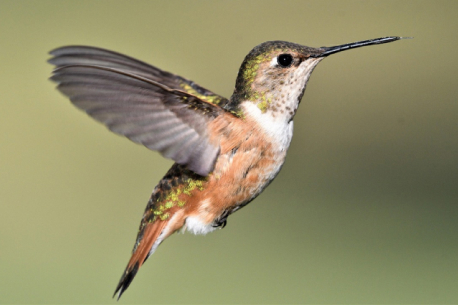
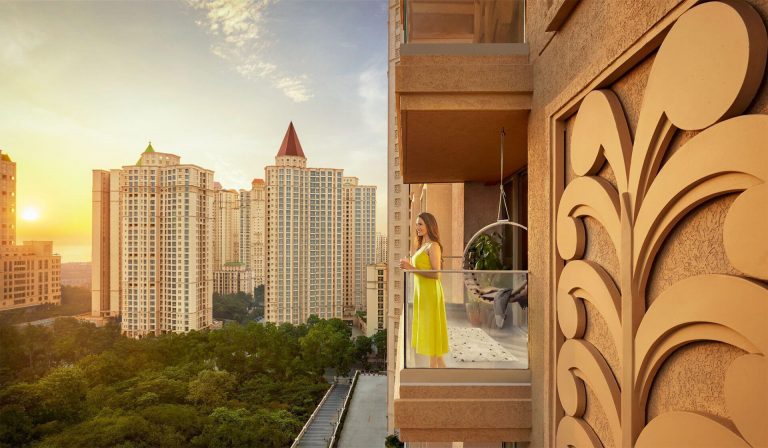
In most growing cities, the soundscape has changed. The morning chorus of birds has slowly been replaced by traffic, construction, and urban rush. Yet, within the integrated townships developed under the leadership of Surendra Hiranandani, something remarkably different has unfolded. Here, urban growth has not silenced nature. Instead, it has made room for it.
Across Powai and Thane, the presence of thriving birdlife is not incidental, it is the result of intent. It is a story of planning that began not with blueprints alone, but with trees, soil, water bodies, and an understanding that cities must breathe if they are to truly flourish.
A Vision Rooted in Green
Long before sustainability became a corporate mandate, Surendra Hiranandani had already begun shaping his developments around ecological sensitivity. His interest in horticulture was not peripheral to his real estate journey, it was central to it.
In his early years, he visited botanical societies to deepen his understanding of flora and fauna. During travels abroad, he would observe plant species unique to different geographies, often introducing suitable varieties back home after studying their compatibility. The process did not stop at planting; it extended to monitoring growth, ensuring adaptation, and nurturing each landscape as a living ecosystem by planting more indigenous trees.
More than one lakh trees have been planted across various projects under his leadership. These include over around 50 indigenous species, 50 exotic species, and 50 varieties of palms. Rare and heritage trees such as Rudraksha (Elaeocarpus ganitrus) and Weeping Willow (salix Babylonica) have found new homes within these townships. Each plantation drive whether on Earth Day or Environment Day reinforces a long-term mission to plant 2 to 3 lakh trees across developments.
As Mr. Hiranandani has often reflected:
“Urban development must not disconnect us from nature. A city that preserves its trees, water bodies and birdlife preserves its soul. Gardens are not luxuries; they are essential spaces that restore balance in our lives.”
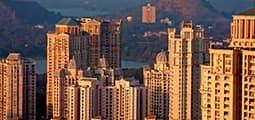
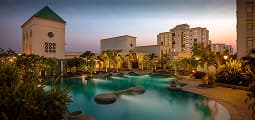
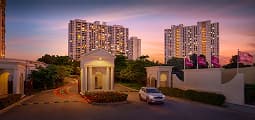
This philosophy is not symbolic. It is visible in the expansive gardens of Powai and Thane, in the preserved hill slopes, and in the layered landscapes that now support a rich avian community.
Why Birds Matter
Birds are often described as indicators of ecological health. They respond quickly to environmental changes, making them one of the most reliable measures of ecosystem balance.
They occupy almost every ecological niche predators, insect hunters, seed dispersers, nectar feeders. Some sit at the top of the food chain and are highly sensitive to toxins. Others depend on specific plants for food or nesting. When birds thrive, it usually means the broader system is functioning well.
The documentation of 48 bird species in and around Hiranandani Premises including Thane Nursery , Nirvana Garden Powai, Forest Garden Powai, and Hill Forest Powai suggests a habitat that supports layered vegetation, insect life, water sources, and safe nesting spaces.
This diversity did not happen by accident.
Designing for Life, Not Just Living
The presence of raptors like the Black Kite and Booted Eagle suggests healthy prey cycles. Kingfishers and cormorants indicate functioning water bodies. Sunbirds and flowerpeckers signal nectar-rich flowering trees. Hollow-nesting birds like the Coppersmith Barbet thrive where dead wood is responsibly retained instead of cleared away.
This layered ecosystem is the result of:
- Mature canopy trees for nesting and roosting
- Mid-level shrubs for shelter
- Ground vegetation to support insect populations
- Permanent water features
- A conscious preference for native plant species
- Minimal ecological disturbance during maintenance
Rather than treating gardens as decorative spaces, the planning views them as living habitats.
A Model for Urban India
In rapidly urbanizing cities, domestic gardens and residential landscapes collectively form some of the largest remaining vegetated areas. When designed with intention, they can become sanctuaries for biodiversity.
The Hiranandani townships demonstrate that development and ecology need not be adversaries. When leadership prioritizes research, innovation, and environmental responsibility, the outcome is not just aesthetic beauty but ecological resilience.
Today, the sight of a Purple Sunbird hovering near blossoms, the call of the Asian Koel at dawn, or the swift dive of a kingfisher into a water body stands as quiet validation of a long-held belief: that cities must grow with nature, not against it.
In preserving trees, water, and birdlife, Surendra Hiranandani’s developments offer more than homes they offer habitats. And in doing so, they remind us that sustainable urbanism is not merely about reducing harm, but about actively creating spaces where life in all its forms can thrive.
The Birds of Hiranandani Estate
Below is the recorded avifaunal diversity in and around the estates:
| Sr. No. | Common Name | Scientific Name | Family | Feeding Habit | Status |
|---|---|---|---|---|---|
| 1 | Black Kite | Milvus migrans | Accipitridae | Scavenger | Common |
| 2 | Brahminy Kite | Haliastur indus | Accipitridae | Mixed | Rare |
| 3 | Shikra | Accipiter badius | Accipitridae | Mixed | Rare |
| 4 | Common Iora | Aegithina tiphia | Aegithinidae | Insectivore | Occasional |
| 5 | White-throated Kingfisher | Halcyon smyrnensis | Alcedinidae | Mixed | Common |
| 6 | Common Kingfisher | Alcedo atthis | Alcedinidae | Piscivore | Common |
| 7 | Cattle Egret | Bubulcus ibis | Ardeidae | Mixed | Common |
| 8 | Indian Pond Heron | Ardeola grayii | Ardeidae | Mixed | Common |
| 9 | Booted Eagle | Hieraaetus pennatus | Accipitridae | Mixed | Rare |
| 10 | Red-wattled Lapwing | Vanellus indicus | Charadriidae | Mixed | Occasional |
| 11 | Ashy Prinia | Prinia socialis | Cisticolidae | Insectivore | Common |
| 12 | Blue Rock Pigeon | Columba livia | Columbidae | Granivore | Common |
| 13 | Spotted Dove | Streptopelia chinensis | Columbidae | Granivore | Occasional |
| 14 | Jungle Crow | Corvus macrorhynchos | Corvidae | Scavenger | Common |
| 15 | House Crow | Corvus splendens | Corvidae | Scavenger | Common |
| 16 | Greater Coucal | Centropus sinensis | Cuculidae | Mixed | Occasional |
| 17 | Thick-billed Flowerpecker | Dicaeum agile | Dicaeidae | Frugivore | Common |
| 18 | Black Drongo | Dicrurus macrocercus | Dicruridae | Insectivore | Occasional |
| 19 | Scaly-breasted Munia | Lonchura punctulata | Estrildidae | Granivore | Occasional |
| 20 | Common Swallow | Hirundo rustica | Hirundinidae | Insectivore | Common |
| 21 | Dusky Crag Martin | Hirundo concolor | Hirundinidae | Insectivore | Common |
| 22 | Long-tailed Shrike | Lanius schach | Laniidae | Mixed | Occasional |
| 23 | Coppersmith Barbet | Psilopogon haemacephalus | Megalaimidae | Frugivore | Common |
| 24 | Green Bee-eater | Merops orientalis | Meropidae | Insectivore | Common |
| 25 | Asian Paradise Flycatcher | Terpsiphone paradisi | Monarchidae | Insectivore | Occasional |
| 26 | Paddyfield Pipit | Anthus rufulus | Motacillidae | Insectivore | Common |
| 27 | Tickell’s Blue Flycatcher | Cyornis tickelliae | Muscicapidae | Insectivore | Occasional |
| 28 | Purple-rumped Sunbird | Nectarinia zeylonica | Nectariniidae | Nectarivore | Common |
| 29 | Purple Sunbird | Cinnyris asiaticus | Nectariniidae | Nectarivore | Common |
| 30 | Eurasian Golden Oriole | Oriolus oriolus | Oriolidae | Omnivore | Occasional |
| 31 | House Sparrow | Passer domesticus | Passeridae | Omnivore | Common |
| 32 | Little Cormorant | Phalacrocorax niger | Phalacrocoracidae | Piscivore | Common |
| 33 | Alexandrine Parakeet | Psittacula eupatria | Psittaculidae | Frugivore | Occasional |
| 34 | Rose-ringed Parakeet | Psittacula krameri | Psittaculidae | Frugivore | Common |
| 35 | Red-vented Bulbul | Pycnonotus cafer | Pycnonotidae | Omnivore | Common |
| 36 | Red-whiskered Bulbul | Pycnonotus jocosus | Pycnonotidae | Omnivore | Common |
| 37 | White-eared Bulbul | Pycnonotus leucotis | Pycnonotidae | Omnivore | Occasional |
| 38 | White-breasted Waterhen | Amaurornis phoenicurus | Rallidae | Omnivore | Occasional |
| 39 | White-browed Fantail | Rhipidura aureola | Rhipiduridae | Insectivore | Occasional |
| 40 | Common Myna | Acridotheres tristis | Sturnidae | Omnivore | Common |
| 41 | Asian Pied Starling | Gracupica contra | Sturnidae | Omnivore | Occasional |
| 42 | Common Tailorbird | Orthotomus sutorius | Cisticolidae | Omnivore | Common |
| 43 | Jungle Babbler | Turdoides striata | Timaliidae | Insectivore | Common |
| 44 | Yellow-eyed Babbler | Chrysomma sinense | Sylviidae | Omnivore | Occasional |
| 45 | Asian Koel | Eudynamys scolopaceus | Cuculidae | Frugivore | Occasional |
| 46 | Oriental Magpie Robin | Copsychus saularis | Muscicapidae | Mixed | Common |
| 47 | Common Swift | Apus apus | Apodidae | Mixed | Common |
| 48 | Brown Bush Warbler | Locustella luteoventris | Locustellidae | Insectivore | Common |