































 Back


Why India’s Next GCC Wave Has a Thane Address
How Centaurus at Hiranandani Estate is built for the Global Capability Centre era
India has quietly become the global capital of capability. Over 1,700 Global Capability Centres (GCCs) now operate across the country, employing nearly 1.9 million professionals and generating more than $64 billion in annual revenue. (Source: NASSCOM–Zinnov India GCC Landscape Report, 2024) By 2030, that number is expected to grow to over 2,100 GCCs — and the talent, the ambition, and the investment to get there are already in motion.
So, what are Global Capability Centres?
A Global Capability Centre is an offshore unit that serves as a strategic extension of a company’s global operations, delivering high-value functions like technology, analytics, finance, and operations. Think of it as the company’s brain, just housed in a different geography.
For decades, the GCC story was told almost exclusively through the lens of Bengaluru, Hyderabad, and Chennai. These cities wrote the template: deep technology talent, Grade A office parks, government incentives, and a critical mass of GCC companies that made each city its own self-reinforcing ecosystem.
But GCCs in 2025 look very different from what they were a decade ago. They’ve long outgrown their identity as cost-optimisation units. Today, they lead product development, drive AI and data science roadmaps, and influence boardroom decisions from Bengaluru to Boston. And as they’ve evolved, so have their expectations of the spaces they work in — it’s no longer just about square footage, but about smart, scalable, connected workplaces that can genuinely support global-standard operations. That shift has opened a door for new locations.
“Global capability centres are no longer executing tasks — they are leading global charters. The workspace they call home needs to reflect that ambition.”
The Global Capability Centre Inflection Point
GCCs started out as back-office support units — IT helpdesks, finance shared services, routine processing. Over time, they’ve transformed into something far more strategic. Today’s GCCs are genuine hubs of product innovation, engineering excellence, and enterprise AI. Companies like Goldman Sachs, Microsoft, and Honeywell no longer use their India operations merely for scale. They rely on them for the kind of speed, depth, and capability that the parent organisation simply couldn’t build as effectively anywhere else.
That shift has real implications for real estate. When a GCC is housing 500 engineers building the company’s next AI platform, or 1,200 analysts supporting global risk management, the workspace stops being an operational convenience and becomes a strategic asset in its own right.
- 1,700+ GCCs in India today
- $64B+ Annual GCC revenue
- 40% Office absorption by GCCs in 2024
What Global Capability Centres Actually Need From a Workspace?
Scale Without Fragmentation
A growing GCC can’t afford to have its teams scattered across multiple buildings or disconnected floors. Fragmentation kills culture, slows collaboration, and makes day-to-day operations harder than they need to be. What these organisations genuinely need is the ability to bring large teams — sometimes hundreds, sometimes thousands of people — under one roof, in one contiguous space. That’s why floor plate size matters. It’s the foundation for building cohesive teams, creating meaningful collaborative zones, and growing without things breaking apart. For organisations evaluating office space in Thane, this is a particularly compelling consideration given the availability of large-format, campus-style developments.
Infrastructure That Matches Global Standards
GCCs serve multinational organisations, and the buildings they operate from need to keep up. That means genuinely reliable, redundant connectivity. It means IoT-enabled, AI-powered building management systems that can track thousands of data points in real time. And it means globally recognised certifications — WiredScore, SmartScore, LEED, IGBC — that aren’t just badges on the wall, but assurances that the building will perform when it needs to. For any GCC whose headquarters runs regular audits on offshore operations for compliance, safety, and sustainability, these aren’t nice-to-haves. They’re the starting point. Increasingly, they’re the benchmark against which GCC workspace in India is being evaluated.
Ecosystem, Not Just a Building
Attracting senior talent is as much a location decision as it is a compensation one. A campus embedded in a township that offers real amenities — good housing nearby, schools, hospitals, places to unwind after work — is a fundamentally different proposition from an isolated commercial tower. People notice, and it shows up in hiring and retention numbers.
Thane: The Emerging Global Capability Centre Corridor
Thane has always had solid fundamentals. It sits at the junction of Mumbai’s Eastern Express Highway and Ghodbunder Road, drawing from one of the MMR’s deepest talent pools, and offering commercial property in Thane at a fraction of what you’d pay in BKC, Powai, or Lower Parel. What’s changed is the pace and scale of infrastructure coming its way.
Metro Line 4 — running 32 kilometres from Kasarvadavali in Thane to Wadala in Mumbai — will directly link Thane to Mumbai’s core commercial districts. Metro Line 5, connecting Thane to Bhiwandi and Kalyan, extends that reach further. And the Thane-Borivali underground tunnel, at 11.8 kilometres, will bring what used to be a painful commute down to roughly 15 minutes. None of this is speculative. These projects are funded, approved, and actively under construction. When they’re done, the time-cost equation for working in Thane will look quite different.
The corporate story here is already being written, too. TCS chose Hiranandani Estate for its largest India office — over 3 million square feet, built for 30,000 employees. That’s not a bet on potential; it’s a vote of confidence in a location that has already proven itself. Other GCC companies across tech, BFSI, and life sciences have followed, drawn by the infrastructure, the talent availability, and the quality of life that a self-contained township genuinely offers. As more global enterprises explore commercial projects in Thane, this growing corporate presence continues to make the case.
“Thane is no longer Mumbai’s quieter neighbour. It is a city where global companies are choosing to invest — and the infrastructure is being built to match that confidence.”
Centaurus: Built for the Global Capability Centre Era
At 1.9 million square feet across 21 floors, Centaurus is one of the largest single commercial projects in Thane-MMR region — and it’s been designed with GCC operations specifically in mind, not retrofitted to accommodate them.
Floor Plates That Enable Scale
A typical floor plate at Centaurus is approximately 98,000 sq.ft, running at close to 70% efficiency — one of the largest in the region. That means an organisation can comfortably place entire departments, functions, or business units on a single floor, without having to split teams or manage people across disconnected spaces.
It sounds simple, but it matters enormously. Global companies setting up capability centres don’t want their teams navigating multiple elevator lobbies just to have a conversation. They want floor plans that reinforce culture, enable spontaneous collaboration, and give them room to grow without everything having to be reconfigured. For businesses seeking scalable office space in Thane, Centaurus is built precisely for that.
Infrastructure That Meets Global Audit Standards
Centaurus is among the first commercial properties in Thane to receive both WiredScore and SmartScore pre-certification — assessments that specifically look at digital infrastructure quality, connectivity resilience, and smart building capability. Its Command & Control Centre monitors over 1,500 data points in real time, using IoT sensors, AI-powered analytics, and cloud-based systems across six pillars: access management, safety and security, efficient operations, integrated communication, sustainability, and occupant comfort. For a GCC navigating global compliance standards, that kind of visibility is genuinely reassuring.
A Tenant Profile That Speaks for Itself
The companies that have already chosen Hiranandani Estate — TCS, Bayer CropScience, ICICI Bank, IDFC First Bank, WeWork, WNS, BNP Paribas — represent a considered cross-section of global and national organisations across technology, BFSI, and pharma. When a globally significant financial institution like BNP Paribas picks a location, it’s because that location has been rigorously evaluated. For companies still making their own decisions about where to establish or expand their GCC workspace in India, that kind of peer validation carries real weight.
The Township Advantage
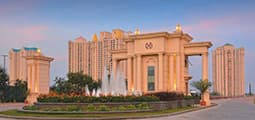
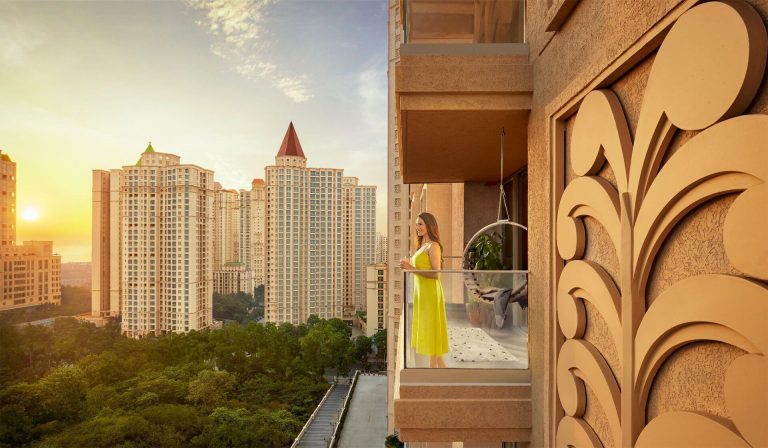
What makes Centaurus stand out isn’t the building alone — it’s what surrounds it. Hiranandani Estate is a 375-acre township with Hiranandani Hospital, The Walk (a retail and F&B hub with Starbucks, Westside, Croma, and more), schools and educational institutions, hotels including Planet Hollywood, and 17,000+ trees across green spaces and jogging tracks.
For a GCC with hundreds or thousands of employees, that environment isn’t peripheral — it’s part of the offer. It’s what makes people actually want to come in, and what makes them want to stay.
In Closing
India’s GCC story is still unfolding. The organisations that will benefit most are the ones thinking beyond today’s headcount — the ones asking where they want to be in five or ten years, and choosing locations that can support that journey. The conversation has long been dominated by Bengaluru, Hyderabad, and Chennai. That’s beginning to change, as talent supply in established hubs tightens and companies start looking more seriously at diversifying their India footprint.
Share Blog Via




Subscribe to Our Blogs
Sign up to get the latest updates from House of Hiranandani, right in your inbox.